Brewer: Cambrew
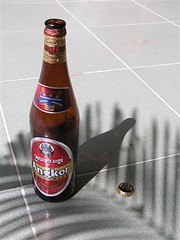
I thought that I’d start reviewing beer with Angkor: because as the bottle says, it’s the National Beer. Along with Bayon Beer, Cambrew have been brewing it in Sihanoukville since the 1960s with a long break for the Khmer Rouge regime, resuming operations in 1992.
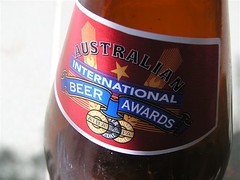
Confusingly, the bottle also displays multiple Australian Beer Awards. As I have a vague and addled memory of attending one of these award festivals, I thought I should find out how they won. The International section of the awards is open to “all commercial brewers authorised, licensed or registered in their country of origin, with a minimum brewlength of 30 hL” – Cambrew produces about 5000 hL. Each year Angkor has been entered in “Class 1 – Lager, Subclass A European Style Lager” with fairly mixed results. The dirty secret of the Australian Beer Awards is that everyone gets a medal.
To “win” its Silver Medal in 2002, it was beaten for a Gold medal in the class by lager luminaries such as Toohey’s Hahn Premium Lager and Nambibia’s finest beer, Windhoek Lager. The award that counts, “Best in Class”, was deservedly won by James Squire Original Pilsener. By 2003, Angkor had slipped to Bronze medal, with the likes of Hollandia, a faux-import brew owned by Liquorland, aimed at the bottom end of the the supermarket chain’s market; and Vanuatu’s only entry, Vanuatu Beer. To add the classic Indochinese geopolitical insult to injury, Angkor was beaten in its class by Vietnam’s BGI.
Cambrew Says: “A rich golden lager, it embodies the full quality of a European beer with an alcohol content of 5.2% to 5.5% by volume. The beer is full bodied with soft bitterness and light hoppy aroma to satisfy any discerning drinker”
I say : Light hoppy aroma smells suspiciously like bread dough, rather than hops. Straw-colored with a soapy head. Sweet aftertaste, slightly metallic.
Availability: Everywhere, in draught, bottle, can.
If this beer was an 80s hair metal band that never really went away it would be: Bon Jovi
So, if I want to drink the best beers that Cambodia has to offer, what will it be? I’ll be there in 10 weeks and I don’t want to waste my time drinking metallic boiled cabbage beer! 🙂
Angkor was the best I had the several times I have been there, but get it in bottles and you will lose that metallic, been-in-a-can-in-the-khmer-hot-season taste. It has decent color, and a good, European-style taste as opposed to general American mass-produced pisswater beers.